[OSMAZÔME]: OLFACTORY EXHIBITION and UMAMI!
published on 2026-10-06Science Festival: “OSMAZÔME,” an olfactory exhibition on umami
The Fête de la Science is a free, popular event celebrating science, technology and innovation across the country. Open to everyone, it encourages exchange and the sharing of knowledge between scientists and the public.
For this year’s edition at the University of Toulouse, themed “Savoury Science” (Saveurs savantes), we are delighted to unveil our olfactory exhibition OSMAZÔME, devoted to the umami taste.
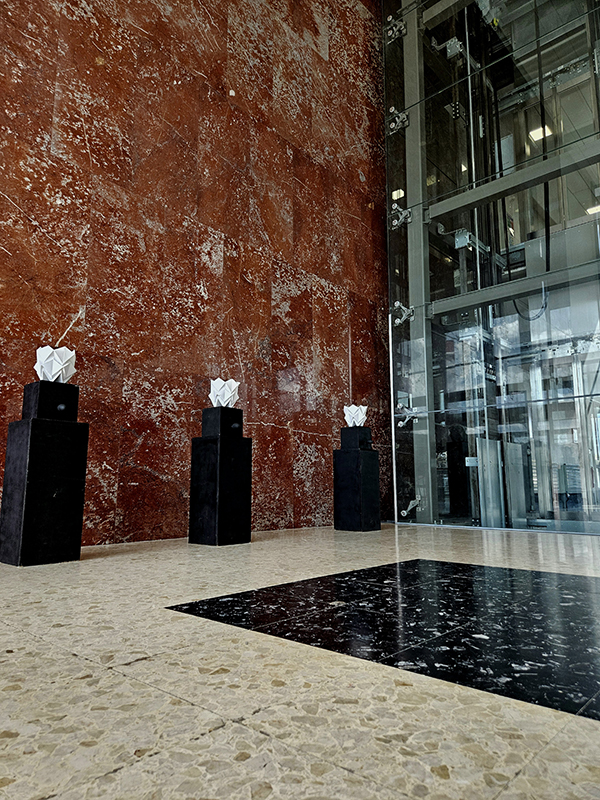
Four osmorigamis (or olfactorigamis) invite you to discover four scents linked to umami. Through your sense of smell, you can explore umami-rich foods such as kombu, a Japanese kelp.
OSMAZÔME: an olfactory exhibition and an “UMAMIME” experience
The word umami is borrowed from the Japanese うま味, meaning “savoury taste.” Professor Kikunae Ikeda coined this spelling, which combines hiragana and kanji, from umai (うまい/旨い, “delicious”) and mi (味, “taste”).
Umami is now recognised as the fifth basic taste, alongside sweet, sour, bitter and salty. Long thought to be specific to Japanese culture, it has been umamimously accepted around the world (umamimement is a coinage by Pierre Bénard Ségu).
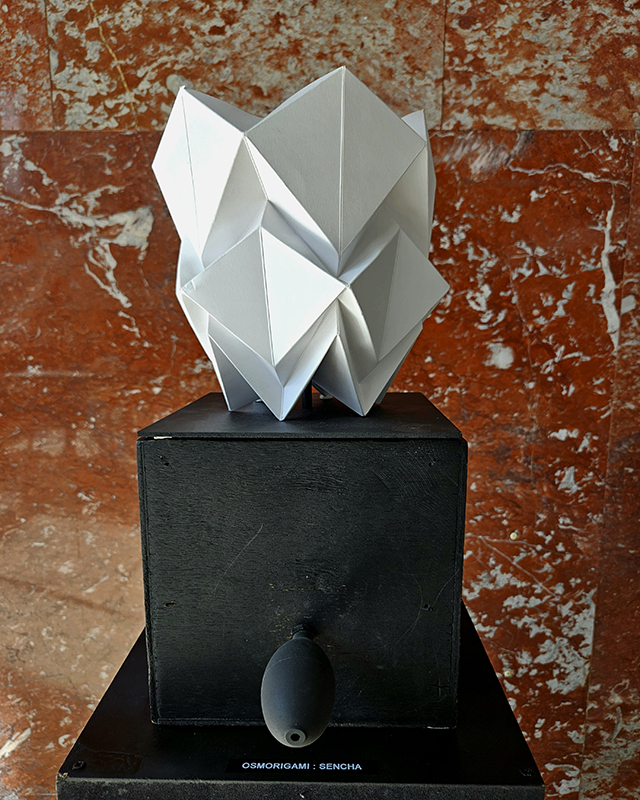
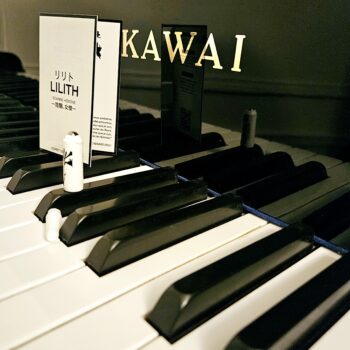
As part of the Fête de la Science, OSMOART and Pierre Bénard Ségu present an olfactory exhibition on this singular taste. To evoke the foods associated with umami, four hand-operated scent diffusers, activated with a squeeze bulb, let visitors discover four umami-related fragrances through their nose.
These devices, called OSMORIGAMI, are each topped with a paper origami and release the aroma of different umami-rich foods, such as kombu, a Japanese kelp.
The installation takes its name from osmazome, the term used by the chemist Louis-Jacques Thénard for the flavourful principle extracted from meat and broths. Made up of four OSMORIGAMIS, it is called OSMAZÔME.
[OSMORIGAMI OR OLFACTORIGAMI]
It’s simple: hold your nose above the little origami flower and meet the fragrance it illustrates. For some of the origamis, gently squeeze the bulb to release a puff of air and encounter the essence of an aromatic material associated with umami.
SENCHA 煎茶
Words from the perfumer
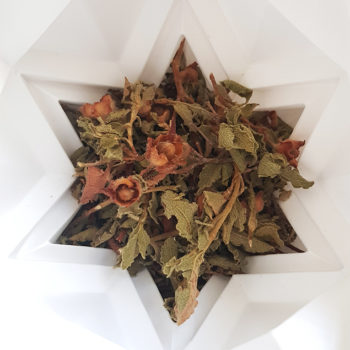
Sencha is a Japanese green tea; its name, 煎茶, literally means “infused tea.”
Like all teas, it belongs to the Theaceae family.
Umami is one of the hallmarks of green tea tastings and selections.
On the palate, it offers a soft roundness with a slightly iodine-like touch.
Its green scent sometimes recalls marine notes, and often drifts through the streets of Japanese cities, mingled with the steam of teapots.
Fresh, herbaceous and luminous, it brings a breath of Japan, green and briny, to the top notes of a perfume.
KOMBU 昆布
Words from the perfumer
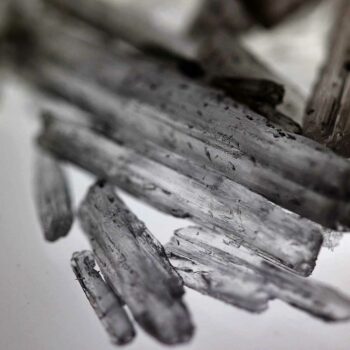
Kombu is a large brown seaweed from Japan, harvested mainly off Hokkaido. Its name is written 昆布 in Japanese.
It belongs to the Laminariaceae family.
Dried, it is the base of dashi, the broth at the heart of Japanese cuisine.
On the palate, it releases a deep, round, mouth-watering umami.
Its aroma is marine, iodic and slightly smoky, almost salty, recalling the shore at low tide, sea spray and salt.
Very long-lasting, it brings a breath of ocean, mineral and umami, to the top notes of a perfume.
TOMATO トマト
Words from the perfumer
The tomato is a fruit native to the Americas, now grown throughout Japan. Its name is written トマト in Japanese.
It belongs to the Solanaceae family. When ripe, it is rich in glutamate.
On the palate, it releases a lively, juicy, slightly tangy umami.
Its aroma is green, sulphurous and a little metallic, almost sharp, recalling a crushed leaf, the stem and damp earth.
Its freshness also evokes the bright summer sun.
Very fleeting, it brings a breath of the vegetable garden, green and umami, to the top notes of a perfume.
SHIITAKE 椎茸
Words from the perfumer
Shiitake is a Japanese mushroom, grown on oak and chestnut logs. Its name is written 椎茸 in Japanese.
It belongs to the Omphalotaceae family.
Dried, it is the base of vegetarian dashi.
On the palate, it releases an intense, meaty, woody umami.
Its aroma is earthy, slightly smoky and woody, almost animalic, evoking roasted chestnut and leather, as well as damp undergrowth, bark and moss.
Very long-lasting, it brings a breath of forest, earthy and umami, to the top notes of a perfume.
“ALL ROADS LEAD TO AROMAS”: AN OLFACTORY LECTURE
Created by Pierre Bénard Ségu in 2022 for the olfactory lecture series Écouter les parfums (“Listening to Perfumes”) at the Jardins du Muséum de Toulouse, the lecture “Tous les chemins mènent aux arômes” is an introduction to the world of aromas and olfaction.
Through around ten perfumer’s “touches,” it shows how smells shape our perceptions, emotions, memories and eating habits. After an introduction to the profession of perfumer-creator and to how the sense of smell works, the lecture covers the biological mechanisms of taste and olfaction, notably the essential role of retronasal olfaction and the notion of umami.
The speaker then explores the links between smells, memory and emotion, before turning to the chemistry of aromas: odorant molecules, the differences between natural, nature-identical and artificial flavourings, and the example of vanillin. The processes of aroma creation, thermal reactions and olfactory marketing are also discussed.
Finally, the lecture highlights various aromatic plants, spices and herbs, describing their sensory characteristics and their effects on our senses. It concludes on the cultural, historical and emotional importance of aromas in everyday life, which lead us by the nose.
|